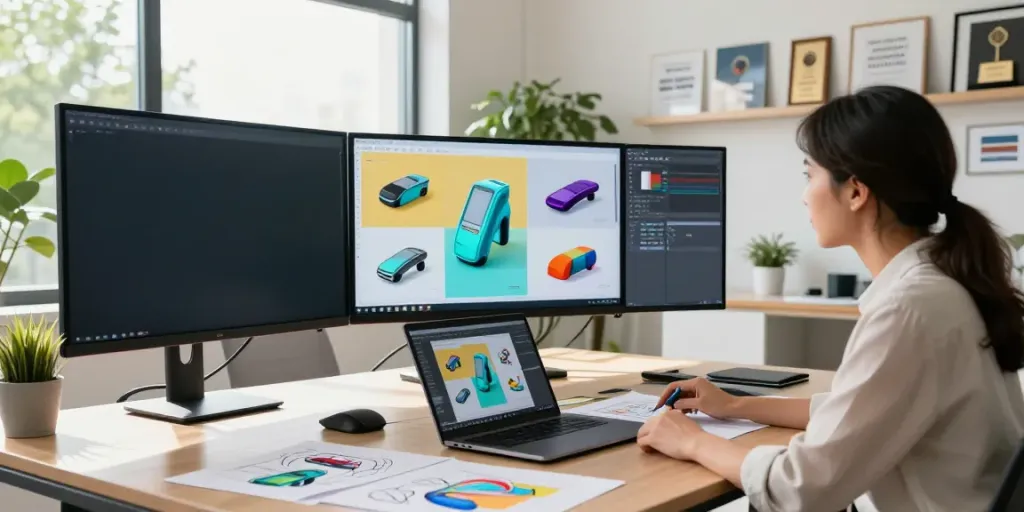
Understanding the Importance of 3D Product Visualization Software
In today's fast-paced digital marketplace, the ability to effectively showcase products through 3D product visualization software has become crucial for businesses looking to stand out. This innovative technology allows brands to bring their products to life, enhancing customer engagement and boosting conversion rates. As more consumers turn to online shopping, utilizing 3D visualization tools not only provides a competitive edge but also establishes a more intuitive shopping experience.
What is 3D Product Visualization Software?
3D product visualization software enables businesses to create realistic, interactive representations of their products digitally. This software can generate photorealistic images, animations, and even virtual realities that allow customers to explore products from multiple angles and perspectives. By simulating a product's real-world setting, businesses can convey essential details about dimensions, materials, and functionality, ultimately enhancing the customer’s understanding before making a purchase.
Key Benefits for Businesses
- Enhanced Product Understanding: 3D visualization allows potential buyers to see products as they would appear in reality, reducing uncertainty about dimensions and finishes.
- Increased Engagement: Interactive 3D models capture customer interest and can lead to longer browsing times on e-commerce sites.
- Higher Conversion Rates: By providing a clearer view of products, businesses can instill confidence in buyers, leading to increased sales.
- Cost Efficiency: Reducing the need for physical prototypes and enabling digital marketing campaigns can save substantial costs.
How 3D Visualization Enhances Customer Experience
The shopping experience has dramatically changed with the integration of 3D product visualization. Customers can interact with products as if they were handling them physically, making it simpler to visualize how a product fits into their lives. This immersive experience helps eliminate doubts and hesitations, encouraging informed purchasing decisions. Additionally, the ability to view products in various configurations and settings grants customers a personalized experience, further enhancing satisfaction and loyalty.
Choosing the Right 3D Product Visualization Software
Features to Consider When Selecting Software
When scouting for the right 3D product visualization software, businesses should consider several key features to find a solution that fits their unique needs:
- Realism: Look for software that offers high-quality, photorealistic renders to accurately depict product details.
- Interactivity: Choose platforms that allow users to rotate, zoom, and explore the product from various angles for a more engaging experience.
- Configurability: The ability to customize product attributes such as colors, finishes, and dimensions can be a game-changer.
- Integration: Ensure the software can be seamlessly integrated into your existing e-commerce or CRM systems.
- User-Friendly Interface: A straightforward, easy-to-navigate interface will facilitate smoother interactions for both staff and customers.
Comparing Popular 3D Visualization Tools
Several popular 3D product visualization tools are making waves in the industry. For example:
- Autodesk: Renowned for its powerful visualization capabilities, Autodesk offers software solutions that cater to architectural and product design industries.
- Londondynamics: Their 3D product visualizer allows customers to engage with products interactively, enhancing the user experience.
- Unity: Known for game development, Unity also offers robust visualization tools that help create dynamic and immersive product experiences.
Assessing Scalability and Compatibility
As your business grows, your software needs may change. It's essential to select 3D product visualization software that can scale with your operations. Consider the following:
- Does the software cater to increasing product lines?
- Can it integrate with new technologies that your business may adopt in the future?
- Is the software capable of handling higher data loads as your customer base expands?
Best Practices for Implementing 3D Product Visualization
Integrating 3D Software with Existing Systems
Ensuring that your chosen 3D product visualization software works seamlessly with your current systems is vital. Integration can involve connecting the visualization software with your product information management system, e-commerce platform, and customer relationship management systems. This ensures that data flows smoothly between platforms, saving time and enhancing efficiency.
Training Staff for Effective Utilization
Once the software is integrated, it is crucial to provide training for your staff. This involves familiarizing your team with the tool’s functionalities and the best practices for creating and maintaining 3D models. A well-trained team can maximize the benefits of 3D visualization, leading to more efficient workflows and better customer experiences.
Creating Engaging Customer Experiences with 3D Models
To leverage 3D models effectively, ensure they are fully optimized for user interaction. Create product demos that allow customers to affect the model by changing colors or dimensions, providing an engaging experience. Additionally, consider implementing augmented reality features that allow customers to visualize products in their environment, further enhancing engagement and satisfaction.
Real-World Applications of 3D Product Visualization Software
Case Studies in Various Industries
3D product visualization has transformed how businesses in different sectors present their products. For instance, in the furniture industry, companies use 3D models to let customers see how a piece of furniture fits within their own space. In the automotive sector, manufacturers and dealers utilize 3D visualizations to allow potential buyers to customize their vehicles, altering colors and features in real-time.
Understanding Customer Choices through Visualization
Analyzing how customers interact with 3D visualizations can provide insights into their preferences and behaviors. By tracking which features are frequently toggled or which configurations are most popular, businesses can refine their offerings to better meet customer needs, ultimately driving higher sales.
Leveraging Feedback for Continuous Improvement
Feedback obtained through customer interactions with 3D visualizations is invaluable. Regularly solicit customer feedback to identify any difficulties they face when using the visualization tools. This information allows businesses to adjust and improve their 3D models, ensuring that they remain effective sales tools and enhancing customer satisfaction.
Future Trends in 3D Product Visualization for 2026
Emerging Technologies in 3D Visualization
Looking ahead, several emerging technologies are set to reshape the landscape of 3D product visualization. Advancements in artificial intelligence and machine learning will enable more sophisticated customization options, allowing software to analyze customer preferences and automatically generate personalized product recommendations. Furthermore, developments in virtual reality (VR) and augmented reality (AR) will enhance the immersive shopping experience, blurring the lines between the digital and physical worlds.
Predicted Industry Changes and Innovations
As the demand for online shopping continues to grow, businesses that harness the power of 3D product visualization will be poised for success. Innovations such as real-time rendering, which allows customers to see changes to their desired products in an instant, will soon become commonplace. Companies that embrace these changes will provide superior customer experiences and drive growth.
Preparing for the Future: Strategies for Adaptation
To stay ahead, businesses must remain adaptable. Invest in continuous training for staff, keep abreast of the latest technological advancements, and be open to feedback from customers. Adopting an agile mindset will ensure that your organization can pivot when necessary and effectively integrate new visualization technologies as they emerge.